
The Copper Carbonate Matrix
When you think of the color green in the gemstone world, Emerald or Jade might be the first to come to mind. But neither of those stones can match the hypnotic, swirling, psychedelic patterns of Malachite.
Famous for its lush, opaque green color and intricate banding that resembles the concentric rings of a tree, malachite is not a silicate like quartz. It is a copper carbonate hydroxide mineral [Cu2CO3(OH)2].
It forms primarily in the oxidation zone of massive copper deposits, often growing alongside its stunning, deep-blue sister mineral, Azurite. When the two grow intertwined, the resulting stone is called Azurmalachite, offering a striking contrast of vivid green and oceanic blue.
A Favorite of the Ancients
Malachite has captivated human imagination for millennia, not just for jewelry, but as an industrial and artistic staple.
The Original Eye Makeup
In Ancient Egypt, malachite was highly revered. It was believed to represent the afterlife and resurrection. The Egyptians frequently carved it into protective amulets (like the Eye of Horus) and, most famously, ground it down into a fine green powder to create kohl—the iconic eye makeup worn by pharaohs and queens like Cleopatra.
The Russian Winter Palace
During the 18th and 19th centuries, the Ural Mountains of Russia produced some of the most massive malachite boulders ever found. The Russian Tsars utilized the stone on a monumental scale. If you visit the Winter Palace (the Hermitage Museum) in St. Petersburg today, you will find the Malachite Room, where massive columns, giant vases, and entire fireplaces are veneered in stunning, seamlessly matched malachite.
Working with Malachite: Lapidary Challenges
For modern lapidary artists, malachite is simultaneously a joy and a nightmare to work with. It cuts quickly, but its chemical makeup demands immense respect.
The Toxicity Danger
Because it is a copper ore, malachite dust is highly toxic. Inhaling copper carbonate dust can cause severe respiratory issues, heavy metal poisoning, and a condition known as "metal fume fever."
When cutting or sanding malachite, you must strictly adhere to the following safety protocols:
- Never cut dry: Always use a continuous drip water system on your saws and grinding wheels to trap the dust in a heavy sludge.
- Wear a respirator: A standard surgical mask is not enough. Wear a NIOSH-approved N95 or P100 half-face respirator.
- Wash your hands: Always scrub your hands and forearms thoroughly after a cutting session before eating or touching your face.
Important Lapidary Tip: Because you are generating toxic heavy metal sludge, do not dump your malachite water bucket directly down your household drain or into your garden! Let the sludge settle to the bottom of your bucket, pour off the clear water, and dispose of the solid sediment in the trash.
Softness and Undercutting
Malachite has a Mohs hardness of only 3.5 to 4.0. It is incredibly soft compared to agate (7.0).
Because of its softness, malachite cuts very fast on diamond wheels. You must use an extremely light touch, or you will grind a flat spot into your cabochon in a split second.
Furthermore, malachite often exhibits variations in hardness between its light green and dark green bands. If you press too hard during the sanding stage, the softer bands will grind away faster than the harder bands, resulting in a bumpy, rippled surface—a frustrating lapidary defect known as undercutting.
Achieving the Perfect Polish
Because it is so soft, standard polishes like Cerium Oxide are largely ineffective on malachite.
To achieve that glassy, museum-quality finish:
- Ensure your final sanding step is flawless (go up to 3,000 or 8,000 grit on soft resin wheels).
- Use Tin Oxide or Zam (a green chromium oxide compound).
- Apply the compound to a very soft buffing wheel, like unstitched muslin or soft leather, and use very light pressure.
Read more about selecting the right polishing compounds in our Master Guide to Polishing Compounds.
Exquisite Malachite Specimens
The true beauty of malachite lies in its variety of patterns. From "bullseyes" to straight banding, every slice reveals a unique landscape.
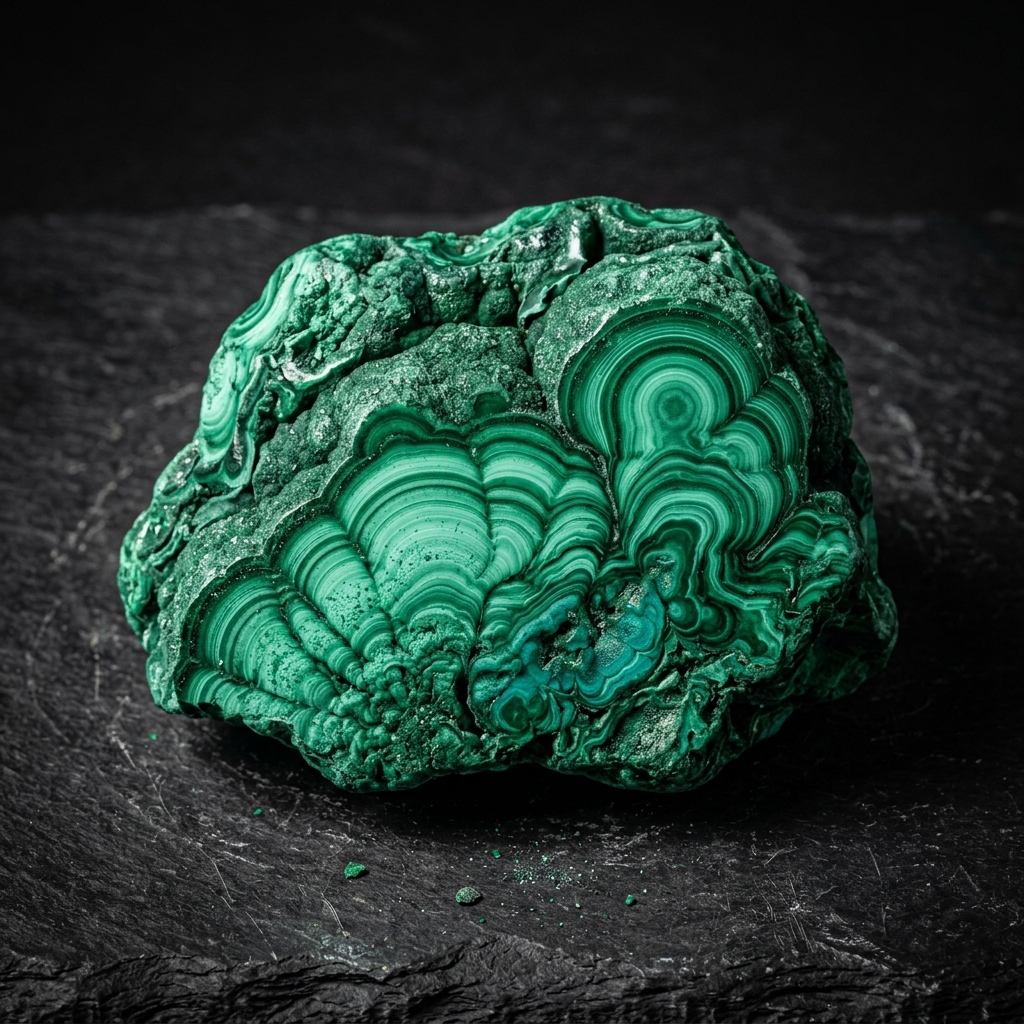
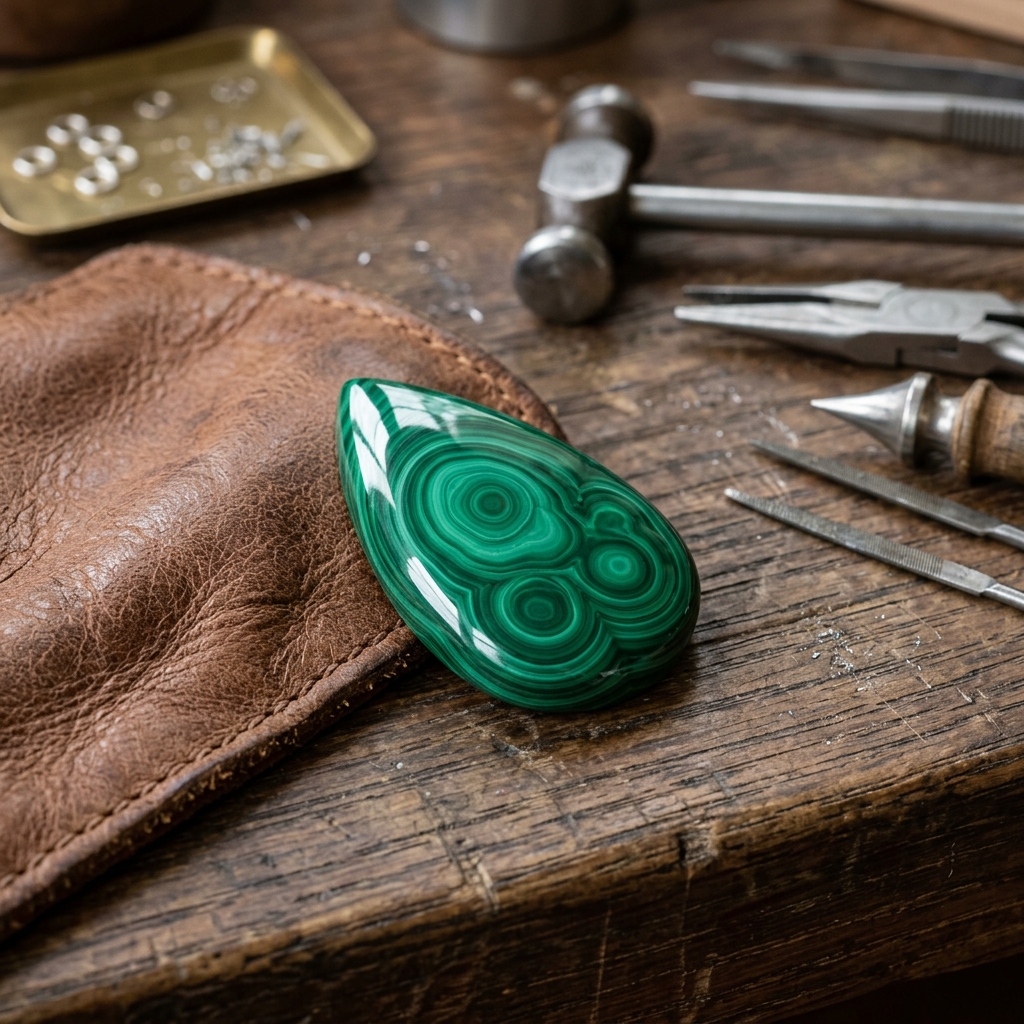
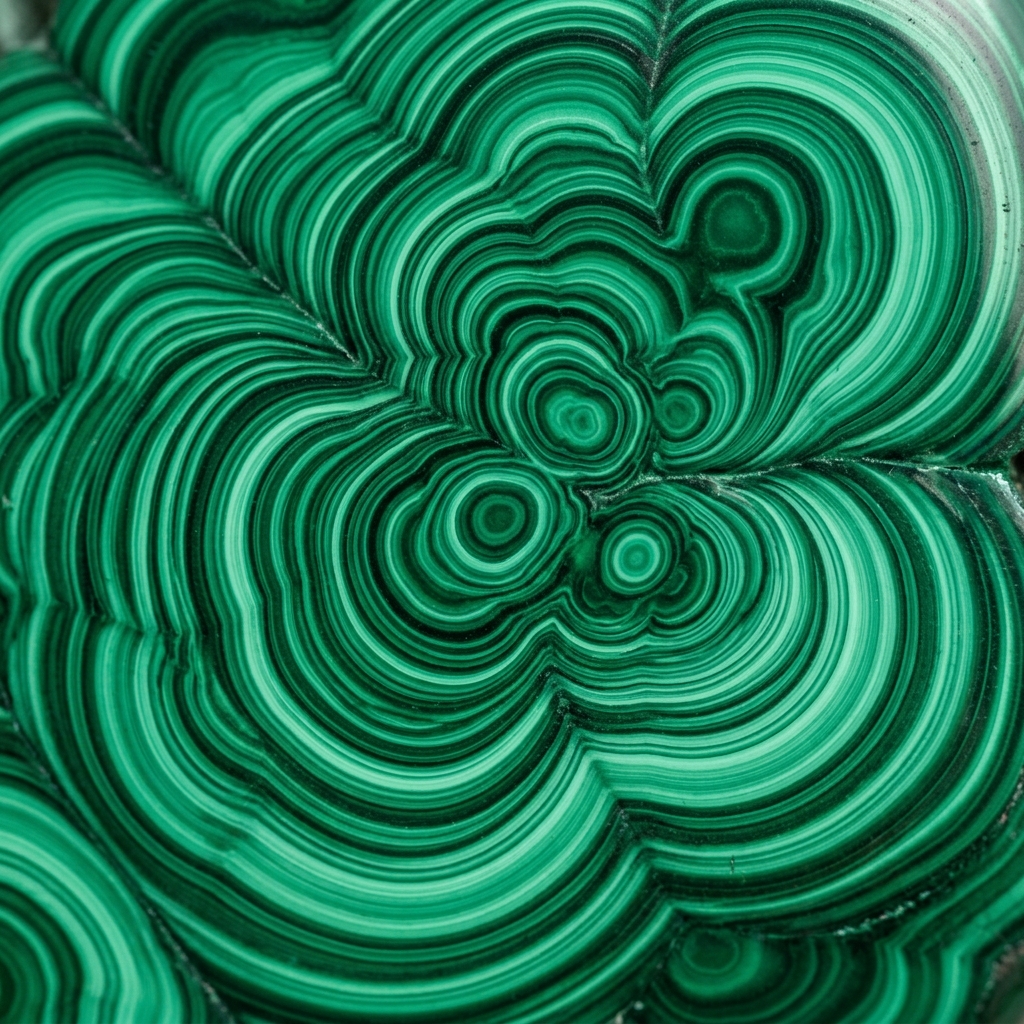
Whether you are a collector hunting for the perfect botryoidal specimen or a lapidary artist learning to master soft stones, malachite remains one of the most rewarding and visually striking minerals the earth has ever produced.
For more scientific details and research on this topic, you can check out the Mindat.org geological database.