
The Intersection of Art, Water, and Electricity
Setting up a lapidary shop is fundamentally different from building a traditional woodworking or metalworking studio. While a woodworker battles sawdust, a lapidary artist must safely combine high-speed electrical motors, razor-sharp diamond blades, and a continuous, messy flow of water.
Whether you are converting a corner of your basement, dedicating a garage space, or building a standalone shed, a successful lapidary workshop relies on three critical pillars: Water Management, Electrical Safety, and Ergonomics.
Failure to plan these elements properly will not only result in a frustrating workflow but can also cause catastrophic damage to your home's plumbing or pose severe health and safety risks.
1. Water Management and Plumbing
Water is the lifeblood of lapidary work. It acts as a coolant to prevent your stones from fracturing and as a lubricant to clear away the microscopic rock dust created by diamond wheels and saw blades.
The Danger of Rock Sludge
When water mixes with ground rock, it creates a heavy, clay-like sludge. Never, under any circumstances, wash lapidary sludge down a standard household drain. This sludge will settle in the P-traps and horizontal runs of your plumbing, slowly curing into a substance that is practically concrete. It will require expensive, professional plumbing excavation to fix.
Implementing a Settling System
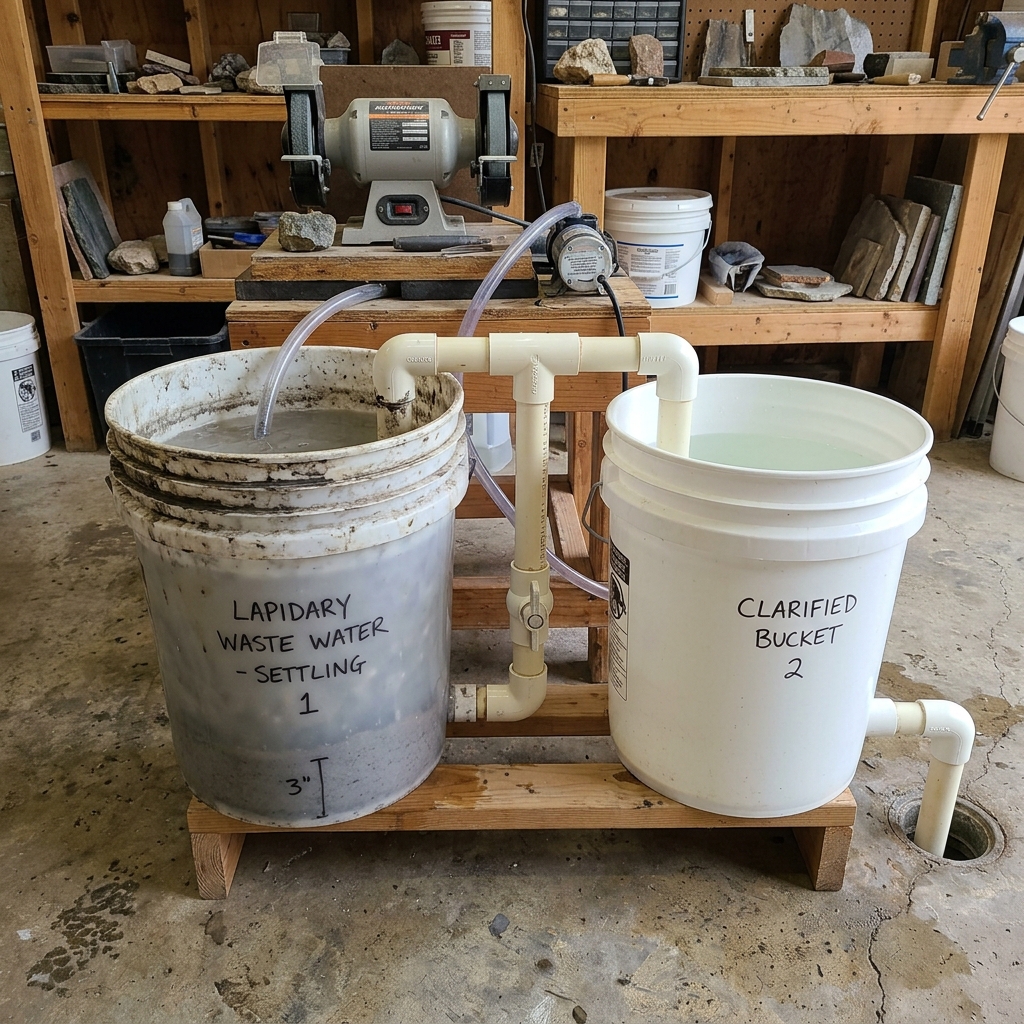
Instead of direct plumbing, use a multi-bucket settling system:
- The Catch Basin: Place your machines on a slanted tray that drains directly into a 5-gallon bucket beneath your workbench.
- The Settling Process: Allow this bucket to sit undisturbed for 24 to 48 hours. The heavy rock dust will sink to the bottom, leaving relatively clear water on top.
- Disposal: Carefully decant (pour off) the clear water into your yard or drain. The remaining thick mud at the bottom should be scooped out, placed in a plastic bag, and thrown into your standard household trash.
Pro Tip: If you live in an area with freezing winters, ensure your water supply lines and waste buckets are kept in a temperature-controlled environment. Frozen water lines can crack your expensive lapidary machinery.
2. Electrical Safety and Power Loads
Lapidary equipment, especially large slab saws and heavy-duty cabbing machines, draws significant amperage. Running these machines simultaneously on a standard 15-amp household circuit can lead to tripped breakers and overheating wires.
GFCI Protection is Mandatory
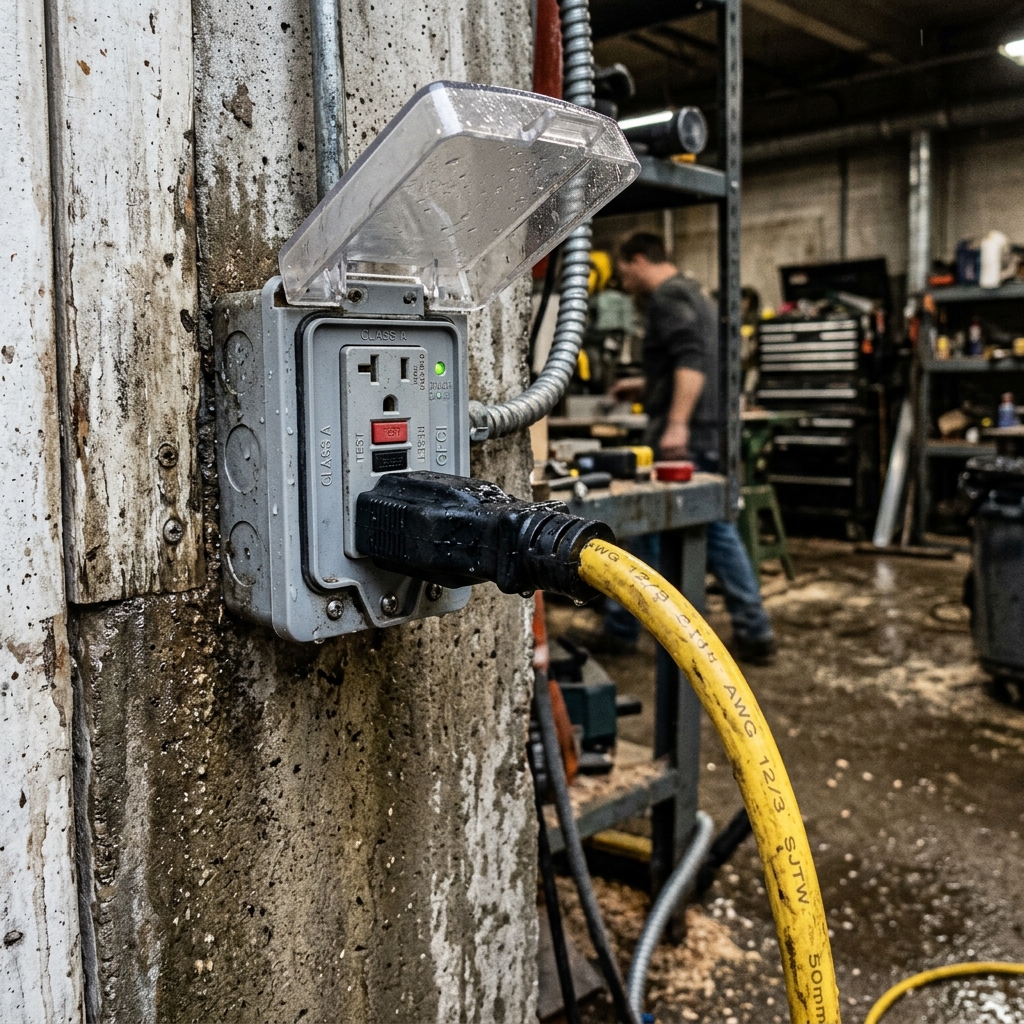
Because you are standing on concrete (often with wet boots) and touching metal machines that are spraying water, Ground Fault Circuit Interrupter (GFCI) outlets are a non-negotiable life-safety requirement. A GFCI outlet will cut the power in milliseconds if it detects that electrical current is traveling through an unintended path (like your body or water), preventing fatal electrocution.
Dedicated Circuits
If possible, hire a licensed electrician to install a dedicated 20-amp circuit specifically for your lapidary bench. This ensures that the high startup surge of a 1/2 HP arbor motor doesn't dim the lights or trip the breaker in the rest of your house.
3. Ventilation and Air Quality
Many beginners assume that because lapidary work is done "wet," there is no risk of airborne dust. This is a dangerous misconception.
As high-speed diamond wheels spin, they atomize the water into a fine mist. This mist carries microscopic particles of silica and toxic minerals (like malachite or bumblebee jasper) directly into the air. When the mist evaporates, the invisible, deadly dust remains suspended in your workshop.
Combating Silicosis
Prolonged exposure to silica dust causes Silicosis, an incurable lung disease. To protect yourself:
- Exhaust Fans: Install an exhaust fan near your workstation to pull misty, dust-laden air outside.
- Respirators: Always wear a NIOSH-approved P100 half-face respirator when cutting, sanding, or polishing. Standard surgical masks or N95 dust masks do not provide adequate protection against microscopic silica.
- Wet Cleanup: Never sweep your lapidary floor with a dry broom. Always mop, or use a wet/dry shop vacuum equipped with a HEPA filter.
4. Lighting and Ergonomics
Cutting a perfect cabochon requires the ability to see microscopic scratches on the surface of a wet stone. Poor lighting is the number one cause of frustrating, dull polishes.
The Lighting Setup
You need two types of lighting at your bench:
- Ambient Diffused Light: Overhead LED panels (5000K daylight temperature) to illuminate the entire workspace without casting harsh shadows.
- Directional Task Lighting: An adjustable, stark LED gooseneck lamp positioned directly over your polishing wheels. By holding your stone under this stark light and tilting it, the reflection will instantly reveal any hidden scratches left by previous grinding steps.
Bench Height
Lapidary work requires hours of standing or sitting with your arms extended over grinding wheels. If your bench is too high or too low, you will quickly develop severe lower back and shoulder pain.
- Standing Setup: Your workbench should be at roughly elbow height. Invest in a thick, anti-fatigue rubber mat to stand on.
- Sitting Setup: Ensure your chair is adjustable and that there is adequate knee clearance under the bench. Your grinding wheels should be positioned at mid-chest height so you can rest your forearms on the machine's hand rest comfortably.
Workshop Architecture

Building a lapidary workshop is an investment in your craft and your health. By prioritizing plumbing, electrical safety, and clean air, you create an environment where the only thing you have to worry about is coaxing the hidden beauty out of your next rough stone.
For more scientific details and research on this topic, you can check out the International Gem Society.